Introduction
A locked door knob with no visible screws can stop your day cold. The knob looks smooth, the screws are hidden, and nothing obvious moves when you tug on it. Maybe a bedroom is stuck, a bathroom is locked, or you are changing hardware and realize there’s nothing to unscrew on the face of the knob.
To show you how to remove a locked door knob without screws, you first identify the screwless design, then press a hidden pin or loosen a covered set screw, slide off the knob, and lift off the rose to reach the mounting screws and latch. This guide walks through each knob type, safe tools, emergency opening methods, and when calling Faster Locksmith in the Greater Toronto Area (GTA) makes more sense than pushing harder.
If you want that knob off without wrecking the door or hardware, keep reading for clear, step-by-step help that works on most common Canadian brands.
Key Takeaways
- Identify your knob style first. You will learn how to spot which screwless knob type you have. The four main styles are push pin, hidden set screw, snap fit, and threaded rose. Once you know the style, you can follow the right method instead of guessing and bending parts.
- Gather simple tools before you start. You get a short tools checklist before you work on the door. Basic items like a thin screwdriver, bobby pin, Allen keys, and a utility knife cover most Canadian brands, from Schlage and Kwikset to Weiser. Having tools ready keeps you from prying with kitchen knives or house keys.
- Follow step-by-step instructions for each knob type. You see clear directions for each style plus ways to open a locked knob first. These include privacy-slot releases, card shims, and safe options for keyed and smart locks. When those do not work, you will know the warning signs that it is time to call Faster Locksmith.
- Decide what to do after removal. You finish with advice on reinstalling or upgrading hardware after removal. That includes when rekeying is cheaper than full replacement, how lock grades work, and how Faster Locksmith helps GTA homeowners and property managers upgrade security with a long warranty.
What Is a Screwless Door Knob and Why Is It Harder to Remove?
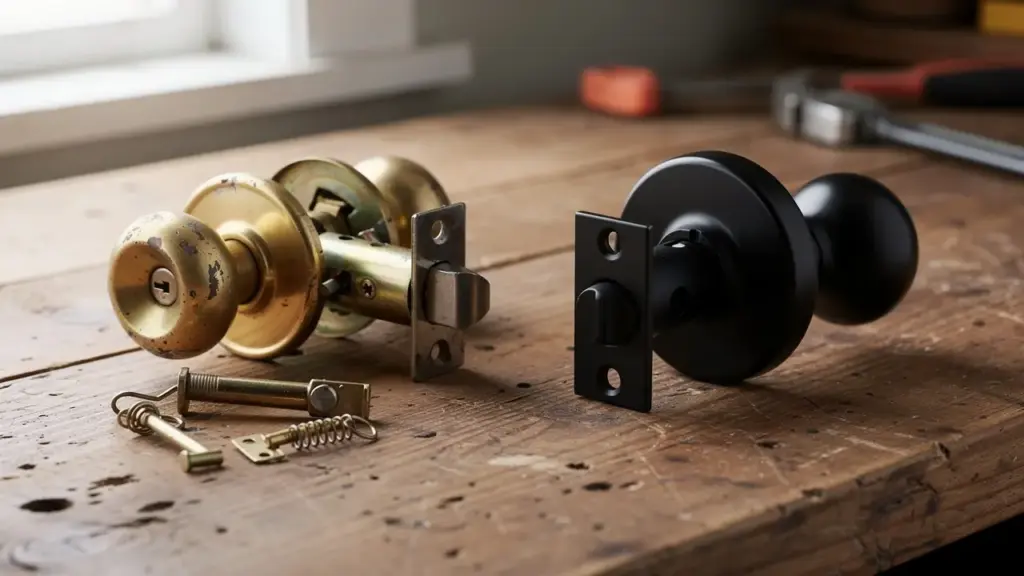
A screwless door knob hides its fasteners under trim pieces, so removal is less obvious than with a regular knob. The knob and rose look smooth because the screws sit behind a snap-on collar, a threaded plate, or a hidden release. That clean look is popular on Schlage, Kwikset, and Yale sets.
These knobs usually fall into four groups:
- Push-pin (detent) styles keep the knob on the spindle with a small spring pin you reach through a tiny hole.
- Hidden set screw designs use a collar that hides a small Allen screw.
- Snap-fit collars clip onto a mounting plate.
- Threaded roses spin on and off like a nut on a bolt.
All four styles keep the screws out of sight.
That hidden hardware improves both style and security, since someone outside cannot simply undo two face screws. It also means random prying is more likely to bend the spindle or scar the door. According to Statistics Canada, police record over one hundred thousand break and enter cases across Canada each year, so intact, well-fitted locks matter for safety. Before any work, identifying which screwless type you have is the first step toward clean removal.
“Give yourself thirty seconds to inspect the knob before you touch a tool. That half-minute often saves you from half an hour of repairs.”
— Technician tip from Faster Locksmith
What Tools Do You Need to Remove a Screwless Door Knob?

To take off a screwless door knob safely, you need a few basic tools ready beside you. The goal is gentle pressure in the right place, not raw force. Simple hand tools are enough for most residential doors in the GTA.
Consider laying out:
- Thin flathead screwdriver
This helps pry off roses and collars without chewing up paint. It also fits into narrow slots that hold trim rings in place. A narrow tip gives more control around stainless, brass, or matte black finishes from brands like Schlage or Weiser. - Bobby pin, stiff wire, or straightened paperclip
These thin pieces reach the detent hole on push-pin knobs or the emergency release on privacy sets. Stiffer wire works better than soft metal since it will press the spring pin without bending. Keep one in a kitchen drawer or key cabinet for quick lockouts. - Allen wrench set and basic screwdrivers
Small hex keys loosen hidden set screws on higher-end knobs. A Phillips screwdriver removes the mounting plate once the rose is off. Many property managers in condos and offices keep a small kit like this on-site so routine lock issues do not turn into late-night emergencies. A little penetrating oil can also help on older, rusty hardware.
“The right tool used gently is almost always faster than the wrong tool used forcefully.”
— Common locksmith saying
How to Remove a Screwless Door Knob: Step-By-Step Methods by Knob Type
To remove a screwless door knob cleanly, match your knob to one of the main designs, then follow the steps for that type. Random prying often bends parts and makes reassembly harder. Common types across Canadian homes use push pins, hidden set screws, snap-fit roses, or threaded plates.
Once you find the right style, work slowly with the door open so you can reach both sides. For brands like Schlage, Kwikset, and even lesser-known names like Schener, the overall logic is the same, even if small details differ.
Push-Pin (Detent) Method — Most Common in Canadian Homes

Push-pin screwless knobs show a tiny round hole or narrow slot on the neck of the knob. Many Kwikset and Schlage privacy and passage sets use this layout, which is also behind many “how to take a door knob off without screws” searches.
- Find the detent hole.
Look closely at the shank of the knob near the rose. Rotate the knob slowly and check all the way around for a small round hole. Good light or a phone flashlight makes this easier. - Press the spring pin.
Straighten a bobby pin or paperclip and place the tip into that hole. Press straight in until you feel a small spring give way. If it does not move, try turning the knob a few degrees and pressing again. - Pull the knob off the spindle.
While you hold the spring pin down with the tool, pull the knob straight away from the door. Light left and right turns sometimes help the knob slide off the spindle. Avoid sharp yanks, which can bend the internal plate. - Remove the rose and mounting screws.
With the knob off, you will see the circular rose. Many roses twist off by hand, usually counterclockwise, or have a small notch where a flathead screwdriver can pry them free. Under the rose, remove the mounting screws and then pull the latch from the door edge.
Hidden Set Screw Method — Common in Commercial and Upgraded Residential Hardware

Hidden set screw knobs are common on nicer residential levers and many commercial doors from brands like ASSA Abloy and Falcon. The knob or lever feels solid, and a smooth collar hides a small hex screw.
- Expose the collar seam.
Inspect the collar at the base of the knob where it meets the rose. Look for a faint seam or a tiny gap. Slide a thin flathead into that gap and twist gently around the collar until it loosens and slides back. Work slowly to avoid scratching stainless or plated finishes. - Locate the set screw.
With the collar moved, you should see a small recessed screw on the side of the hub. This screw almost always has a hex socket that fits a small Allen key, usually around 1/16 to 3/32 of an inch. - Loosen the set screw.
Fit the correct Allen key into the socket and turn gently counterclockwise. If the key slips, try the next size; using the wrong size is a quick way to strip the head. Loosen the screw until the knob wiggles freely on the spindle. - Remove the knob and latch.
Pull the knob or lever off the spindle and then remove the rose. Underneath, you will find the mounting plate and screws that hold the latch. Remove those screws and slide the latch out through the door edge. If corrosion resists, a little penetrating oil and patience help more than extra muscle.
Snap-Fit Rose Plate Method — Common in Builder-Grade Canadian Condos and Townhouses
Snap-fit roses are popular on builder-grade hardware in condos and townhouses from Toronto to Oshawa. The rose snaps onto a hidden plate with springy clips, which creates the smooth screwless look.
- Find the release notch.
Look around the edge of the rose for a tiny notch or a spot where the gap between rose and door looks slightly wider. You may need to rotate the knob to spot it. Some plastic roses flex a little when you press near the notch. - Pry the rose free.
Insert a thin flathead screwdriver or even a coin into that gap. Pry gently while keeping the blade flat against the metal plate, not the painted door. Work your way around the rose with light pressure rather than forcing one spot. That habit prevents cracks, a common issue on cheaper plastic trim. - Remove the exposed screws and latch.
Once the clips release, the rose will pop off and expose regular Phillips mounting screws. Remove those screws, pull the two halves of the knob set apart, and then slide the latch out from the door edge. If you wondered how to remove an old door knob without screws or a visible slot, this hidden snap collar is often the answer.
Threaded Rose Method — Found in Older and Decorative Hardware
Threaded rose designs show up on older homes and some decorative knobs from makers like Baldwin and Emtek. The rose itself spins on and off like a cap.
- Test the rose direction.
Grip the rose firmly with your hand and try turning it counterclockwise. Some rare models use the opposite direction, so if it will not move with light pressure, test a gentle clockwise turn. - Improve your grip.
If the rose is slick, wrap it with a rubber band or a cloth for more grip. You can also use needle-nose pliers over a cloth, but keep the jaws light so you do not leave bite marks. According to the Builders Hardware Manufacturers Association, higher-grade locks survive hundreds of thousands of test cycles, but their finishes still scratch easily. - Take off the rose, then the knob.
Once the rose unthreads and comes off, look for either a small set screw or a threaded nut holding the knob to the spindle. Loosen that part, slide off the knob, and then remove the latch and mounting hardware as with other types.
How to Open a Locked Screwless Knob Before or During Removal
A locked screwless knob adds one more step, since you must free the latch before the door opens fully. The right method depends on whether the lock is a bathroom privacy set, a simple spring latch, or a keyed exterior knob.
Start by identifying the latch style and any small slots or holes on the outside face of the knob. Some locked knobs open with a paperclip in seconds, while others need cylinder work or full removal. When you are unsure and the door guards your main entry, careful work or professional help keeps the frame and jamb in good shape.
Bypass Techniques Ranked by Invasiveness
You can rank common bypass methods from least invasive to most:
- Use the privacy hole or slot (bathroom/bedroom doors).
For most bathroom and bedroom privacy knobs, look at the outside face of the knob. Many models from Schlage and Weiser have a tiny round hole or straight slot in the center. Insert a straightened paperclip or small flathead screwdriver, then press or turn gently until the inside button pops out and the latch retracts. This is the fastest answer when someone accidentally locks themselves in. - Try a card on plain spring-latch doors.
On non-deadbolted interior doors with a simple spring latch, a flexible plastic card sometimes opens the door without any work on the knob. Slide the card into the gap between door and frame at the latch level, then angle it toward the beveled side of the latch. Wiggle while leaning lightly on the door so the latch slips back. This only works with spring latches, not deadbolts or heavy commercial latches. - Deal with keyed entry knobs and lost keys.
For keyed entry knobs where the key is lost, some people try to learn lock picking or use a bump key on brands like Kwikset. Both methods need practice and can damage worn cylinders. Often the better path is to follow the earlier removal steps, then replace or rekey the cylinder. When the hardware guards your main entry and the weather is harsh, calling Faster Locksmith avoids broken glass or a splintered jamb. According to Statistics Canada, break and enter remains one of the most common property crimes, so a solid, undamaged door after a lockout really matters.
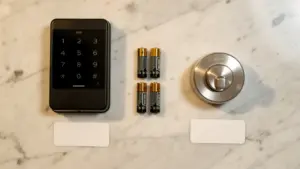
Smart lock knobs from makers like August, Yale, and Schlage Encode add electronics to the mix. Before removing exterior pieces, take out the batteries so you do not short anything. After mechanical work, follow the manufacturer guide to reset codes and reconnect the lock to Bluetooth or Wi‑Fi. If that feels stressful, a technician from Faster Locksmith can handle both the physical and digital sides in one visit.
Common Mistakes to Avoid When Removing a Screwless Door Knob
Many problems with screwless door knobs start when someone guesses at the mechanism and reaches for heavy tools. The most expensive issues come from forcing parts that were meant to slide off gently. A few minutes of checking for holes, slots, or hidden screws saves a lot of repairs.
Even handy homeowners and property managers sometimes slip into the same traps on older or painted-over hardware. Corrosion from Canadian winters around Toronto, Brampton, and Markham can stiffen parts, so patience matters. Here are mistakes that often turn an easy task into a call for emergency help.
| Mistake | Why It Causes Damage | How to Avoid It |
|---|---|---|
| Forcing the knob without releasing the detent | Bends the spindle or cracks the internal plate so the knob will not sit straight later | Always find and press the small pin or release before pulling |
| Wrong Allen wrench size | Rounds out the set screw socket so nothing grips it later | Test several keys gently and stop as soon as one fits snugly |
| Aggressive rose prying | Dents metal trim or splits plastic roses, which then will not snap back cleanly | Pry a little at a time around the full edge with a thin screwdriver |
| Skipping the latch bolt | Leaves hardware stuck in the door edge even after knobs are off | After removing knobs, always take out the latch from the door edge as well |
| Ignoring corrosion | Snaps rusty screws or strips threads that hold future hardware | Spray penetrating oil, let it soak, and work stuck parts slowly back and forth |
| Drilling too quickly | Oversizes the bore hole and sends metal chips into the wood | Only drill when replacement is already planned and safer bypass attempts failed |
“If you feel tempted to hit the knob with more force, that’s usually your sign to stop and reassess the mechanism instead.”
— Senior technician at Faster Locksmith
When Should You Call Faster Locksmith Instead of DIYing?

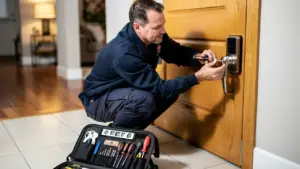
Some screwless knobs come off easily with the methods above, but others fight back or guard high-value spaces. In those cases, bringing in Faster Locksmith is smarter than adding new damage. A licensed locksmith has the training and tools to open and remove hardware from brands like Medeco, Mul‑T‑Lock, and ASSA Abloy without wrecking the door.
Professional help makes special sense when:
- The door is a main exterior entrance or tied to an alarm system
- The lock is high-security, commercial-grade, or part of access control
- Screws are severely rusted or heads are already stripped
- You have tenants or staff waiting and downtime is costing money
Faster Locksmith technicians across the Greater Toronto Area use non-destructive entry methods first, such as picking, bypass shims, and specialty pullers. According to ANSI, Grade 1 commercial locks face much harsher test forces than residential ones, so prying them with basic tools rarely ends well.
Faster Locksmith offers 24/7 mobile service with typical thirty minute response times in cities like Mississauga, Brampton, Oshawa, Markham, and Georgina. Pricing is clear before work begins, and lock replacements or smart lock upgrades come with a five‑year warranty on parts and labor. For new homebuyers, property managers, and business owners, that mix of speed, skill, and warranty coverage beats a long weekend of trial and error.
Reinstalling or Upgrading Hardware After Knob Removal

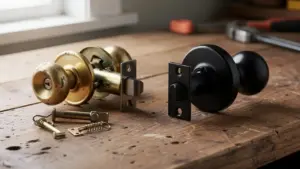
Once the screwless knob is off, you choose what happens next. Some people put the same hardware back, others rekey it, and many take the chance to improve security. The right choice depends on lock condition, location, and how many people need keys.
For an interior bathroom or bedroom knob that still works well, reinstalling the same set after a quick clean is often fine. For main entry doors, especially in rental units or new purchases in the GTA, rekeying or replacement is usually smarter. According to the Builders Hardware Manufacturers Association, Grade 1 locks meet tougher strength and cycle tests than Grade 2 or Grade 3, so an upgrade here improves both durability and resistance to force.
You can think of the options like this:
- Reinstall the existing knob.
This suits interior privacy doors and newer hardware that only needed removal for a stuck latch. Clean moving parts and test the latch with the door open several times before closing it. - Rekey the cylinder.
A locksmith rearranges the pins inside so the old keys stop working and new keys take over. This is popular with new homebuyers across Canada who ask how to remove a locked door knob without screws mainly so they can secure the place on move‑in day. - Upgrade to stronger or smarter hardware.
Exterior doors benefit from an ANSI or BHMA Grade 1 deadbolt paired with a quality knob or lever. Smart locks from Schlage, Yale, and August add keyless entry, which helps property managers and busy families reduce key tracking problems. Faster Locksmith installs and supports all of these options with a five‑year warranty.
Is Rekeying More Cost-Effective Than Full Replacement?
When the knob and latch are in good shape, rekeying almost always costs less than full replacement. The locksmith keeps the existing hardware on the door and changes the key pattern inside the cylinder so old keys no longer open it. That saves the price of new knobs on every door and keeps finishes matching across the home or unit.
Faster Locksmith technicians check each lock on-site and explain whether rekeying is a safe option or if wear makes replacement smarter. For many new homeowners and landlords, rekeying every exterior door right after closing is one of the quickest, budget‑friendly ways to raise security.
Locking In the Right Answer: Final Thoughts on Screwless Knob Removal
Removing a screwless knob becomes much easier once you know which design you have and where the hidden release sits. Push‑pin, hidden set screw, snap‑fit, and threaded rose knobs all come apart in a clear order when you use the right small tools. That same order helps with many brands, whether the label says Schlage, Kwikset, Weiser, or something less familiar.
If the knob is locked, start with gentle bypass methods on privacy and spring‑latch doors, and slow down when exterior keyed or smart locks are involved. When the job feels beyond basic do‑it‑yourself work, Faster Locksmith is ready around the clock across the Greater Toronto Area to open, remove, rekey, or upgrade your locks with transparent pricing and a long warranty.
Frequently Asked Questions
Question 1: How Do You Remove a Door Knob Without Screws or a Latch?
You remove a door knob without visible screws or a face latch by finding its hidden release and then pulling the hardware apart in stages. Often the knob uses a push pin or hidden set screw, while the latch sits inside the door edge behind a faceplate. Many “how to remove door knob without screws or latch” cases turn out to be older mortise or snap‑fit designs that need careful inspection or locksmith help.
Question 2: How Do You Remove a Kwikset Door Knob Without Screws?
You remove a Kwikset screwless knob by using the push‑pin method on the small hole in the neck of the knob. Insert a bobby pin or stiff wire, press the spring pin, and slide the knob off while holding pressure. Then pry off or twist the rose to reveal the mounting screws. This answers most “how to remove door knob without screws kwikset” questions for common privacy and passage models.
Question 3: What Do You Do When a Door Knob Without Screws Is Stuck?
You deal with a stuck screwless knob by adding patience and light lubrication, not more force. Apply a small amount of penetrating oil around the spindle and let it sit fifteen to thirty minutes, then try the proper release method again. For a “door knob without screws stuck” on an exterior door or older hardware, calling Faster Locksmith helps avoid broken spindles or scarred doors.
Question 4: How Do You Fix a Loose Door Knob Without Screws?
You fix a loose screwless knob by tightening the hidden part that holds it to the spindle. On set screw designs, slide back the collar, fit the right Allen key, and snug the screw until the wobble stops. On push‑pin designs, wear in the pin or spindle may mean the knob needs replacement. When people ask how to fix a loose door knob without screws, the answer is nearly always at that hidden connection point.
Question 5: How Do You Remove an Old Exterior Door Knob Without Screws or a Slot?
You often remove an old exterior knob without visible screws or a slot by unscrewing a threaded rose that hides the hardware. Grip the rose with a cloth for traction and turn counterclockwise until it comes free, then remove any set screw or nut that holds the knob. For very old or unusual designs that match “how to remove old exterior door knob without screws” or “how to remove old door knob without screws or slot” searches, a locksmith with antique experience, like Faster Locksmith, is the safest bet.
Question 6: Can You Remove a Screwless Door Knob Without Damaging the Door?
You can usually remove a screwless knob without hurting the door if you move slowly and follow the right steps. Work with the door open, use thin tools, and protect finishes with cloth or tape under any prying points. Avoid forcing the knob before releasing the pin, clip, or set screw. Professional locksmiths such as Faster Locksmith use non‑destructive techniques first on every job to keep doors and frames intact.