Introduction
Securing a new home quickly raises one big money question: is it cheaper to rekey or replace locks after you move in? For most Canadian homeowners, rekeying existing locks is the less expensive way to block old keys, as long as the hardware still works well. A locksmith visit to rekey every exterior door often costs less than buying and installing new locksets on each door.
That cost difference matters. Canada recorded over 125,500 police‑reported break and enters in a recent year, according to Statistics Canada, so skipping a security update is risky. Paying for full hardware replacement when you only need new keys wastes money that could go into better home security locks later.
This guide answers the big question many people phrase as “is rekeying locks or replacing them better” for their situation. You will see how both options work, what typical Canadian pricing looks like, and when each choice actually improves security. By the end, you will know when a quick rekey is enough and when Faster Locksmith recommends new hardware instead.
“The first thing we tell new homeowners is simple: make sure you’re the only one with working keys to your doors.” — Faster Locksmith
Key Takeaways
Key decisions about rekeying and replacing locks feel easier when the main points are clear. This short section gives you the core ideas before you read the details. Keep it in mind when you ask yourself whether is rekeying locks or replacing them better for you.
- Rekeying changes only the internal pins of a working lock. The outside hardware stays on the door, and every old key stops working. Security stays at the same level the hardware already provides. This is usually the smart first step after moving into a resale home.
- Replacing removes the whole lockset and installs a new one. This is needed when locks are damaged, builder grade, or you want smart locks or high‑security cylinders. New hardware can raise security, but it costs more in parts and labour.
- In Canada, rekeying costs are usually much lower than door lock replacement cost. You save even more when a locksmith rekeys several locks in one visit, especially right after you move. Replacement makes sense when you need a clear upgrade, not just new keys.
- From a security view, a good lock that is rekeyed is just as strong as the same model installed new. The real security jump comes from moving up to better hardware grades and features. Faster Locksmith helps you decide which path fits your doors, budget, and risk level.
What Is The Difference Between Rekeying And Replacing A Lock?
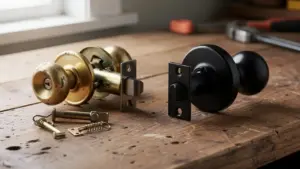
The difference between rekeying and replacing a lock comes down to what changes on the door. Rekeying keeps your current lock hardware in place and only changes the internal pins so a new key works. Replacing a lock removes the entire assembly and installs brand new hardware with a new key.
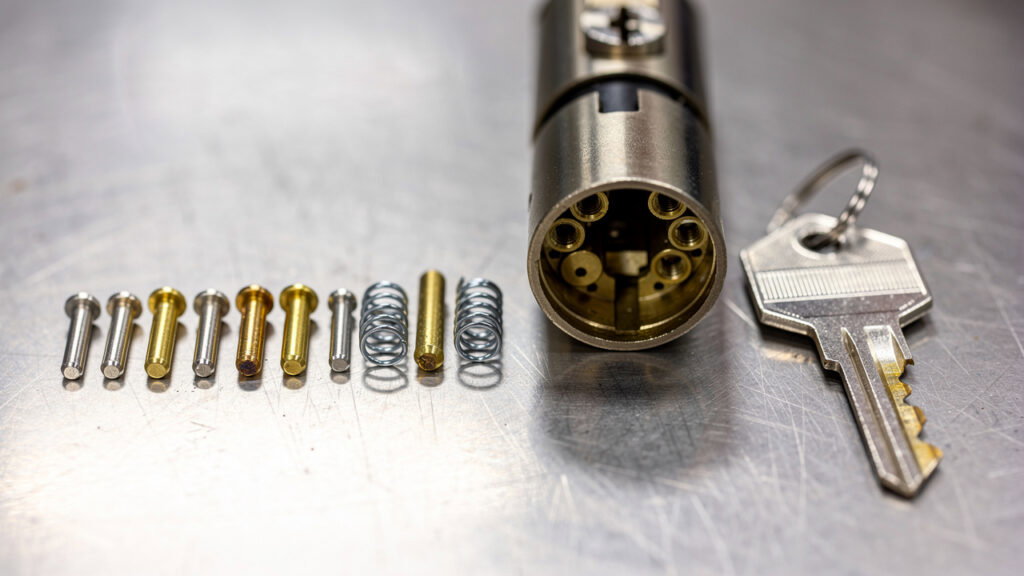
During a rekey, a locksmith removes the cylinder, swaps the tiny pins inside, and cuts a matching key. The outside knob, lever, or deadbolt body does not change. For most common pin‑tumbler locks in Canada, this process takes about 15 to 30 minutes per lock for a trained technician from Faster Locksmith. Old keys become useless, which directly answers the concern behind questions like “is rekeying locks or replacing them better after buying a home.”
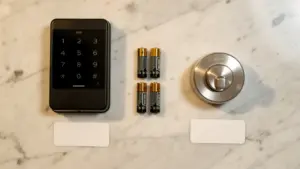
Lock replacement works differently. The locksmith removes the old lock, the latch, and the strike, then installs a new set that matches the door prep. This is the only option when a lock is worn out, damaged in a break‑in, or when you want a different style such as a keypad or Wi‑Fi smart lock from Schlage, Yale, or Kwikset. Replacement can also upgrade from builder‑grade hardware to ANSI/BHMA Grade 1 deadbolts, which ANSI/BHMA identifies as the highest residential rating.
In short:
- Rekeying is about changing who can open a working lock.
- Replacing is about changing what kind of lock you have on the door.
Rekeying Vs. Replacing Locks: A Quick-Reference Comparison
This quick comparison table summarizes the main differences between rekeying and replacement. It answers in one glance when is rekeying locks or replacing them better from a cost and security point of view. Use it as a shortcut while you read the rest of the guide.
| Factor | Rekeying | Replacing |
|---|---|---|
| Hardware changed | Internal pins only | Full lockset, latch, and strike |
| Typical cost in Canada | Service visit plus about $20–$50 per lock | About $150–$400 or more per lock, parts and labour |
| Time on site | Around 15–30 minutes per lock | Often 30–60 minutes per lock |
| Best for | New owners, lost keys, tenant changes, master key setups | Damaged locks, smart locks, major security or style upgrades |
| Security level | Same as existing hardware quality | Can be higher or lower, depending on hardware chosen |
| Smart lock compatibility | Works only with smart locks that use standard cylinders | Required when upgrading to new smart lock models |
If the lock works well and you mainly want to control who has keys, rekeying gives identical security for much less money.
Is It Cheaper To Rekey Or Replace Locks In Canada?

For Canadian homeowners, it is almost always cheaper to rekey working locks than to replace them. Rekeying changes the key that operates the lock, so it answers the concern behind “is it cheaper to rekey or replace locks after moving into a new house.” Full replacement only makes sense when the hardware is weak or damaged, or when you are aiming for a noticeable security upgrade.
Typical locksmith rekey cost in Canada includes:
- A service call
- A per‑lock fee
Cost guides from HomeStars, a Canadian home services marketplace, show many locksmith visits landing around $50–$150 for the trip, with $20–$50 per lock for rekeying work. When Faster Locksmith rekeys several locks at once, the rate per lock often drops, which keeps rekeying locks cost Canada friendly for new buyers and property managers.
Replacement costs look very different:
- A basic deadbolt from a hardware store might cost $40–$80
- Higher‑security or designer models often run $100–$250
- Once you add professional labour, door lock replacement cost or deadbolt replacement cost often falls in the $150–$400‑plus per lock range
Many smart locks from brands like Schlage, August, and Yale sit at the upper end or above that. After‑hours service, emergency visits, or long travel distances can add extra charges as well.
That gap grows when you replace several locks at once. Rekeying four exterior doors after moving into a resale home might land in the low hundreds. Replacing all four with quality smart locks could be well over a thousand. Faster Locksmith offers transparent quotes, a 5‑year product warranty, and local discounts in places such as Richmond Hill and Mississauga, so you know the exact cost before any work starts.
For simple key control, rekeying almost always wins on price.
When Should You Rekey Vs. Replace Your Locks?

Choosing when to rekey or replace comes down to your goal and the condition of the hardware. Rekeying fits best when the lock still works smoothly and you mainly care about who can open the door. Replacement is smarter when the hardware is weak, worn, or not the style of lock you really want.
Rekeying is ideal in several everyday situations:
- Moving into a previously owned house, since old owners, agents, and contractors may still hold keys
- After a key is lost or stolen and you are not sure who might find it
- When a roommate, partner, or house sitter no longer needs access
- When a tenant leaves a rental unit and you want the next renter to start fresh
Many people ask “is rekeying locks or replacing them better right after closing” because they want security without draining their budget. In most of these moves, a full rekey of every exterior door gives strong peace of mind at a modest cost.
Property managers and business owners use rekeying in another way. Faster Locksmith can set up a simple master key system so one master opens several doors while each door still has its own regular key. That helps with units in Brampton, Oshawa, or Markham where staff need fast access but tenants still need privacy. In these settings, rekeying keeps hardware that already performs well and focuses on smarter key control.
Lock replacement is the better choice when the hardware itself is the problem. Consider replacement when:
- Locks stick, feel loose, or show rust or physical damage
- Keys only work from certain angles or need force to turn
- You have had a break‑in or heavy force on the door
- You want features your current lock cannot offer
After a break‑in or heavy force on the door, Faster Locksmith usually recommends changing the lock and reinforcing the strike area. Replacement is also needed when you want the best door locks Canada offers, such as Grade 1 deadbolts from Medeco or Mul‑T‑Lock, or when you upgrade to smart locks from brands like Yale, August, or Wyze. In those cases, new hardware gives a real security upgrade that rekeying cannot match.
“Rekeying fixes who has access. Replacement fixes how hard the lock is to defeat.” — Faster Locksmith
Quick Decision Guide: Rekey Or Replace?
This quick guide summarizes how Faster Locksmith usually answers the question “is rekeying locks or replacing them better” in common situations. It does not replace a proper on‑site check, but it points most people in the right direction. Use it as a fast checkpoint before you call.
| Situation | Recommended Action |
|---|---|
| Just bought a resale home and the locks work well | Rekey |
| Lost a house key or had one stolen | Rekey |
| Former tenant or employee still has a key | Rekey |
| Want one key that opens several doors | Rekey |
| Lock is stiff, loose, or visibly damaged | Replace |
| Door was forced during a break‑in | Replace |
| Upgrading to smart or high‑security locks | Replace |
| Locks are old builder‑grade hardware | Replace |
When you are unsure, a Faster Locksmith technician can inspect your locks on‑site and suggest the most cost‑effective choice without pressure.
Does Rekeying A Lock Actually Improve Your Home Security?

Rekeying improves security by cutting off access for anyone holding an old key, as long as the underlying lock is strong enough. If your current deadbolt is a solid Grade 1 or Grade 2 model, rekeying it gives the same protection you would get from installing the same model new. In that case, the answer to “is rekeying locks or replacing them better” often leans toward rekeying.
From a technical point of view, rekeying does not weaken the lock. The pins are replaced with a different pattern that matches a new key cut. The metal housing, bolt, and strike plate stay the same, so resistance to picking, drilling, and kicking depends on the hardware grade, not the service type. According to ANSI/BHMA, Grade 1 locks offer the highest level of tested strength, followed by Grades 2 and 3.
Trouble starts when the existing lock is low grade or very old. A cheap deadbolt with a thin bolt or a loose strike plate stays easy to force, even after rekeying. In that case, the better answer to “is rekeying locks or replacing them better for security” is usually replacement with stronger hardware. The Government of Canada’s crime prevention tips highlight sturdy doors and quality deadbolts as basic burglary defences, reinforcing this point (Government of Canada).
Modern home security locks can raise protection further:
- High‑security cylinders from brands like Medeco and Mul‑T‑Lock often use restricted keyways and hardened inserts that resist drilling and picking.
- Many smart locks from Schlage and August also use 128‑bit AES encryption, a standard that manufacturers promote as strong protection for digital access codes.
- Reinforced strike plates and longer screws into the door frame help the lock stand up to force.
Rekeying helps when the hardware is already solid. Replacement helps when you need the hardware itself to be stronger.
Why Hire A Professional Locksmith Instead Of Doing It Yourself?

Hiring a professional lock rekeying service usually gives better results than rekeying locks yourself with a kit. Locks are precise mechanical devices, and small mistakes can leave them unreliable or even stuck. A pro helps you avoid turning a simple security update into a lockout.
Consumer rekey kits for brands like Kwikset exist, and some handy people use them for basic jobs. The problem is that they only fit certain models, and it is easy to misplace or mis‑size tiny pins. That can create a lock that:
- Jams in cold or damp weather
- Accepts more than one key pattern
- Fails to extend or retract the bolt fully
None of those outcomes answer the worry behind questions like “is rekeying locks or replacing them better for my family’s safety.”
Professional locksmith services Canada wide, including Faster Locksmith in the Greater Toronto Area, bring experience and full pin kits for many brands. Technicians arrive with the right tools, inspect the door and frame, and spot issues a homeowner may not notice. Research from HomeAdvisor shows many homeowners call tradespeople to fix project attempts, which adds extra cost, and locks are no exception.
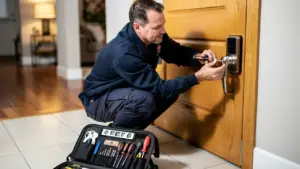
Faster Locksmith offers 24/7 mobile service with about 30‑minute response times in cities such as Mississauga, Brampton, Milton, Richmond Hill, and Georgina. Pricing is upfront with no hidden fees, and products come with a 5‑year warranty, so you are not paying twice if hardware fails. Whether the best answer for you is rekeying, replacement, or a mix of both, a professional makes the work reliable and safe.
“If you rely on a lock to protect your family or business, it’s worth having it serviced by someone who works on locks every single day.” — Faster Locksmith
Make The Right Lock Decision With Confidence
The question “is rekeying locks or replacing them better” rarely has a one‑word answer. Rekeying is usually the smart move when locks are in good shape and key control is the main concern, such as after a move, a lost key, or a tenant change. Replacement is better when locks are damaged, basic builder grade, or when you want modern features like smart access or high‑security cylinders.
Cost and security both matter:
- Rekeying keeps costs low while cutting off old keys.
- New hardware costs more but can raise protection to current standards.
The best choice depends on your doors, your neighbourhood, and your budget.
If you live in the Greater Toronto Area and still feel unsure, Faster Locksmith can visit your property, inspect your existing locks, and explain clear options. You get a straightforward quote before any work, plus fast 24/7 help when security cannot wait.
Frequently Asked Questions
Question: Should I rekey or replace locks after buying a house in Canada?
Rekeying is recommended as soon as you take possession of a resale home in Canada. Previous owners, agents, contractors, or neighbours may still have keys. Rekeying all exterior locks is usually faster and cheaper than replacement. Replace only if the existing locks are damaged, builder grade, or below your desired security level.
Question: How long does it take a locksmith to rekey a lock?
A professional locksmith usually rekeys a standard residential lock in about 15–30 minutes. Multiple locks in one visit are handled more efficiently because setup time is shared. Faster Locksmith technicians arrive with the correct pin kits and tools, so most full‑home rekeys finish in a single appointment.
Question: Can all locks be rekeyed?
Most standard pin‑tumbler locks on Canadian homes and businesses can be rekeyed. Very old, specialty, or heavily worn locks may not accept new pins safely. Many smart locks and electronic access systems use different designs and need replacement instead. A locksmith can quickly check your hardware and confirm whether rekeying is possible.
Question: Is rekeying locks yourself a good idea?
Rekeying locks yourself is usually not a good idea for most people. DIY kits fit only certain brands and models, and small mistakes can leave locks unreliable or insecure. A failed attempt may force a full replacement anyway. Professional service from companies like Faster Locksmith gives you dependable results and warranty coverage.
Question: How much does a locksmith charge to rekey locks in Canada?
In Canada, locksmith rekey pricing often includes a service visit around $50–$150 plus about $20–$50 per lock. Rekeying several locks during one visit lowers the per‑lock cost. Faster Locksmith provides free quotes, clear pricing with no hidden fees, and fair rates for homeowners, property managers, and businesses across the Greater Toronto Area.